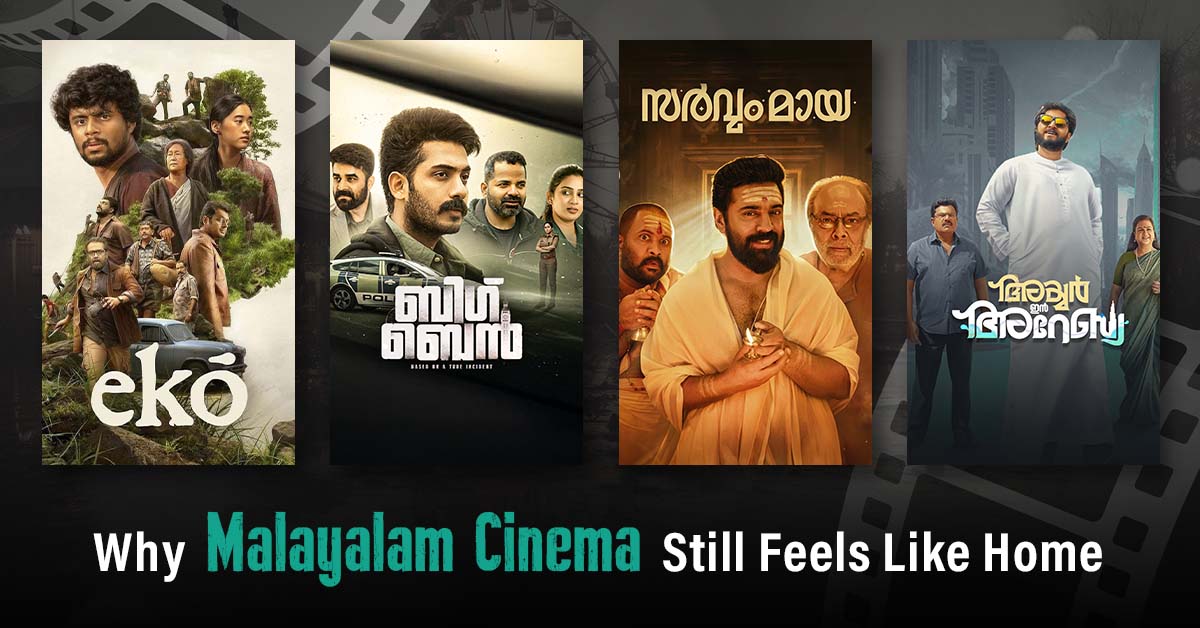
Why Malayalam Cinema Still Feels Like Home
Malayalam cinema storytelling has always stood out for its honesty, patience, and deep connection to everyday life.
Whenever Malayalam cinema comes up in a film conversation, someone usually says this:
“Unka story strong hota hai.”
And honestly, that’s not wrong.
Malayalam films have always believed that if the story works, everything else will fall into place. They don’t rush to impress with scale or spectacle. Instead, they slow down, observe life, and tell stories that feel familiar—sometimes uncomfortably so.
That’s the real magic.
Stars Exist, But Stories Lead
Yes, Malayalam cinema storytelling has stars. Big ones. Mammootty. Mohanlal. Icons, really.
But what’s refreshing is that even these legends are rarely bigger than the story. They play flawed men, tired fathers, lonely husbands, ageing individuals—roles that demand vulnerability more than swagger.
That’s why films like Thanmathra, Manichitrathazhu, or even a comedy like Kilukkam still feel alive today. The actors serve the characters, not the other way around.
These Films Look Like Real Life
One reason Malayali audiences stay loyal is simple: the films look like their lives.
Middle-class homes. Narrow streets. Quiet towns. Family arguments. Awkward silences. Loneliness. Guilt. Love that doesn’t always work out.
Think of Kumbalangi Nights. Or Maheshinte Prathikaaram. Or Sudani from Nigeria. Nothing “big” really happens—and yet everything happens. You don’t watch these films; you sit with them.
Even When It’s Popular, It’s Still Grounded
What’s interesting is how many hugely popular Malayalam films are also deeply rooted.
Bangalore Days felt like a warm conversation about growing up.
Ustad Hotel talked about food, identity, and choice without preaching.
Premam became a phenomenon simply by understanding love at different stages of life.
None of these films shouted. They just spoke clearly.
And audiences listened.
Thrillers Without the Noise
Malayalam cinema also knows how to do thrillers without making them loud.
Drishyam didn’t rely on action sequences or VFX. It worked because it trusted writing and human psychology. The tension came from decisions, not explosions.
Even darker films like Joji, Ee Ma Yau, or Angamaly Diaries found love because they didn’t soften their edges. They trusted viewers to sit with discomfort—and viewers did.
Why This Industry Still Feels Rooted
Malayalam cinema is deeply connected to Kerala’s social and cultural life. Politics, class, faith, family, and changing values often slip into stories naturally, not as messages but as lived reality.
That connection makes the films feel honest. They’re not chasing trends; they’re reflecting people.
The Real Reason It Works
At its core, Malayalam cinema trusts its audience.
It assumes viewers are patient. That they’ll understand silence. That they don’t need everything explained. That emotion doesn’t need background music to land.
In a world full of noise, that trust is powerful.
That’s why Malayalam cinema still feels rooted.
That’s why its audience still shows up.
And that’s why—no matter how the industry changes—these films continue to feel like home.